BMO Field World Cup 2026 Upgrades: How Toronto Is Preparing for FIFA
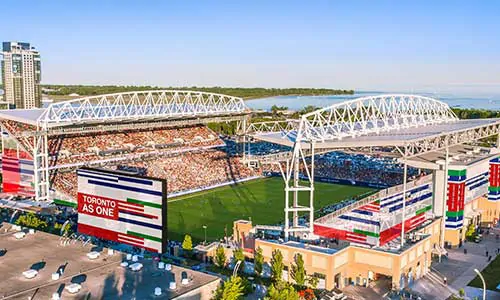
The global spotlight has firmly settled on Ontario’s capital as the world’s most anticipated sporting event arrives in North America. For the first time in history, Canada is co-hosting the prestigious tournament, bringing an unprecedented level of excitement to local sports fans. Central to this monumental occasion is the comprehensive transformation of Toronto’s premier lakeside sports venue. Understanding the scale of the BMO Field World Cup 2026 Upgrades: How Toronto Is Preparing for FIFA is crucial for appreciating how a modest, soccer-specific stadium is being elevated to meet the uncompromising standards of international football.
While BMO Field has long been the beloved home of Toronto FC in Major League Soccer and the Toronto Argonauts in the Canadian Football League, hosting the World Cup requires a massive paradigm shift. Consequently, the stadium is undergoing major structural, technological, and logistical enhancements. This article explores every facet of this multi-million dollar transformation, analyzing how Toronto is rising to the challenge of staging matches on the grandest stage of all.
Table of Contents
- 1. Toronto’s Historic FIFA Milestone
- 2. BMO Field World Cup 2026 Upgrades: How Toronto Is Preparing for FIFA
- 3. Engineering the Expansion: Adding 17,000 Temporary Seats
- 4. Under the Hood: Financial and Structural Realities
- 5. Upgrading the Pitch and Technology
- 6. The Toronto Match Schedule
- 7. Technical and Financial Metrics Summary
- 8. The Long-Term Legacy of the Upgrades
- 9. Frequently Asked Questions (FAQ)
1. Toronto’s Historic FIFA Milestone
Hosting the tournament represents a watershed moment for Canadian soccer. Historically, Canada has successfully hosted major international tournaments like the 2015 FIFA Women’s World Cup and various youth championships. However, staging the men’s flagship tournament is an entirely different undertaking. This represents the first time men’s World Cup matches are being played on Canadian soil, signaling Canada’s arrival as a legitimate global soccer host.
To comply with strict commercial rules, BMO Field is temporarily renamed “Toronto Stadium” for the duration of the competition. Specifically, the global governing body mandate dictates that stadiums must operate as “clean sites,” devoid of any corporate commercial branding. In addition to renaming the venue, the local organizing committee is working around the clock to align the facility with rigorous international guidelines.
Located on the scenic Lake Ontario waterfront at Exhibition Place, the venue stands on historic grounds. Over the last century, this exact site has hosted five different sporting stadiums. By integrating modern structural components into this historic setting, Toronto is bridging its rich sporting past with a dynamic, global future.
2. BMO Field World Cup 2026 Upgrades: How Toronto Is Preparing for FIFA
The execution of the BMO Field World Cup 2026 Upgrades: How Toronto Is Preparing for FIFA requires flawless collaboration between public and private stakeholders. Specifically, the City of Toronto and Maple Leaf Sports & Entertainment (MLSE) are co-managing the extensive physical overhauls. This joint venture ensures that all upgrades satisfy international requirements while respecting the city’s long-term municipal planning.
Moreover, the surrounding infrastructure is undergoing a massive logistical modernization. The city is upgrading pedestrian walkways, enhancing public transit access via the Exhibition GO Station, and implementing robust traffic management plans. These efforts aim to accommodate the influx of tens of thousands of international visitors without disrupting daily municipal life.
Meanwhile, Toronto is actively celebrating its diverse demographic through the tournament theme, “The World in a City.” Dedicated fan spaces, including the official FIFA Fan Festival at Fort York and Nathan Phillips Square, provide vibrant gathering points. This allows residents and visitors to participate in the festivities even if they do not have match tickets.
In contrast to the massive, purpose-built NFL stadiums hosting matches in the United States, Toronto Stadium offers a more intimate setting. Although it is the smallest stadium in the tournament, local organizers believe this compactness will generate an electric, pressure-cooker atmosphere. Consequently, the focus remains on optimizing every square inch of the venue to deliver a premium spectator experience.
3. Engineering the Expansion: Adding 17,000 Temporary Seats
The most noticeable structural change is the dramatic expansion of the stadium’s seating capacity. Prior to the renovations, the venue sat approximately 30,000 spectators for Major League Soccer matches. However, the international soccer federation requires a minimum seating capacity of 45,000 for tournament matches. To bridge this gap, engineers designed a massive, temporary seating system.
Specifically, crews have added 17,000 temporary seats to the stadium’s north and south ends. The north end accommodates roughly 10,000 additional seats, while the south end holds 7,000. These soaring, modular structures are engineered to align perfectly with the existing east and west grandstands, creating a unified bowl design.
Constructing these massive temporary stands adjacent to Lake Ontario presented unique engineering hurdles. For instance, teams had to account for high wind loads coming off the water, requiring deep structural anchoring. In addition, the design ensures that sightlines remain unobstructed, providing fans in the temporary upper tiers with a stellar view of the pitch.
Ultimately, this approach allows Toronto to meet the strict seating threshold without committing to a permanent, oversized stadium. Once the tournament concludes, these modular stands will be carefully dismantled. Consequently, the venue will revert to its sustainable, community-focused capacity of 30,000, avoiding the financial burden of maintaining unused seats.
4. Under the Hood of BMO Field World Cup 2026 Upgrades: How Toronto Is Preparing for FIFA
Staging a global tournament of this scale requires a substantial financial commitment. The total capital cost of the BMO Field World Cup 2026 Upgrades: How Toronto Is Preparing for FIFA is estimated to be between $146 million and $157.9 million CAD. While this expenditure has generated public debate, advocates emphasize the long-term economic benefits and global exposure the tournament brings to the city.
To understand where these funds are allocated, consider the following key investment areas:
- Modular Grandstands: A significant portion of the budget goes toward renting, erecting, and securing the 17,000 temporary seats.
- Broadcasting Infrastructure: Media tribunes, camera positions, and cabling systems are undergoing massive upgrades to support global high-definition broadcasts.
- Player Facilities: The existing locker rooms, medical rooms, and player tunnels are being entirely renovated to meet elite international specifications.
- Public Amenities: The venue is installing self-serve concession kiosks, a brand-new kitchen facility, and upgraded Wi-Fi networks to streamline the spectator experience.
On one hand, critics argue that the public funds could be utilized for local community services. On the other hand, economic impact assessments suggest that hosting six matches will inject hundreds of millions of dollars into Toronto’s tourism, hospitality, and retail sectors. Therefore, the upgrades are viewed as a calculated investment in the city’s global branding.
5. Upgrading the Pitch and Technology
A world-class match demands an impeccable playing surface. To satisfy elite specifications, the pitch at Toronto Stadium features a highly sophisticated hybrid grass technology. Specifically, the field utilizes the SISGrass system, which consists of 95% natural Kentucky bluegrass reinforced by synthetic fibers stitched 7.5 inches into the soil profile. This design ensures that the pitch remains intact, even under the physical demands of consecutive matches.
In addition, an advanced under-soil heating system is installed beneath the turf. This technology regulates the root-zone temperature, promoting consistent grass growth during the colder spring and fall months. Consequently, players can enjoy a highly consistent, safe, and elite playing surface regardless of Toronto’s unpredictable climate.
Furthermore, technology upgrades are not limited to the field of play. The venue has installed four massive, state-of-the-art LED video screens to replace the older scoreboard. These high-definition displays provide fans with crystal-clear replays and real-time data, ensuring that every seat in the expanded stadium has an exceptional view of the action.
To optimize fan convenience, organizers have also introduced modernized, self-serve concession kiosks throughout the concourses. These systems are designed to minimize queue times, allowing spectators to quickly purchase food and beverages and return to their seats. This focus on technology significantly enhances the overall venue experience, making it highly competitive on the global stage.
6. The Toronto Match Schedule
Toronto Stadium is scheduled to host six high-stakes matches during the tournament. This includes five crucial group stage matches and one dramatic Round of 32 knockout game. Notably, the venue hosted Canada’s historic opening match on June 12, 2026, which ended in a hard-fought 1-1 draw against Bosnia and Herzegovina, setting a vibrant tone for the rest of the competition.
Today, on June 26, 2026, the stadium is hosting an exciting Group I fixture between Senegal and Iraq. Fans from across the globe have converged on the Exhibition Place grounds, transforming the waterfront into a colorful, multicultural celebration of soccer. The sheer diversity of matchups highlights Toronto’s role as a global welcoming point.
The complete schedule of matches hosted at Toronto Stadium is detailed in the table below:
| Date (2026) | Stage | Matchup | Status / Result |
|---|---|---|---|
| Friday, June 12 | Group B (Canada Opener) | Canada 1 – 1 Bosnia and Herzegovina | Completed |
| Wednesday, June 17 | Group K | Ghana vs. Panama | Completed |
| Saturday, June 20 | Group E | Germany vs. Côte d’Ivoire | Completed |
| Tuesday, June 23 | Group K | Panama vs. Croatia | Completed |
| Friday, June 26 | Group I | Senegal vs. Iraq | Happening Today |
| Thursday, July 2 | Round of 32 | Group K Runner Up vs. Group L Runner Up | Upcoming |
7. Technical and Financial Metrics Summary
To fully grasp how Toronto Stadium compares with other tournament venues, it is helpful to look at its core specifications. The venue combines temporary modular innovation with highly sustainable permanent infrastructure, setting a unique benchmark for future sporting host nations.
In addition, maintaining this balance between temporary and permanent changes was central to the City of Toronto’s strategy. By choosing this modular approach, the city avoided the trap of building a massive, underutilized stadium that would struggle to find a purpose after the final whistle blows.
The following table provides a clear summary of the core stadium upgrades and technical details:
| Metric / Category | Detailed Stadium Specification |
|---|---|
| Official Tournament Name | Toronto Stadium (complying with clean-site rules) |
| Renovation Cost Range | $146 million – $157.9 million CAD |
| Pre-Tournament Capacity | ~30,000 spectators |
| Tournament Capacity | 45,736 spectators |
| Temporary Seats Added | 17,000 (10,000 North end, 7,000 South end) |
| Playing Surface | SISGrass Hybrid (95% natural grass, 5% synthetic fibers) |
| Core Tech Upgrades | 4 new giant LED displays, upgraded public Wi-Fi, self-serve kiosks |
8. The Long-Term Legacy of the BMO Field World Cup 2026 Upgrades: How Toronto Is Preparing for FIFA
The true success of the tournament is measured by the enduring benefits it leaves behind for the local community. Long after the final match is played and the fans return home, the BMO Field World Cup 2026 Upgrades: How Toronto Is Preparing for FIFA will continue to pay dividends for sports in Ontario. Rather than creating a redundant “white elephant,” the city is curating a highly functional, long-term sports legacy.
Once the tournament concludes, crews will dismantle the 17,000 temporary seats. Consequently, BMO Field will revert to its standard 30,000-seat configuration. This is the optimal capacity for its primary tenants, Toronto FC and the Toronto Argonauts, ensuring that the stadium continues to feel intimate and packed for local domestic matches.
However, many of the premium technological and physical upgrades are entirely permanent. For example, the state-of-the-art hybrid grass pitch, the under-soil heating system, and the four massive LED video screens will remain. Similarly, the completely renovated player locker rooms, upgraded media tribunes, and advanced broadcasting infrastructure will serve future sporting events for decades.
Ultimately, these advancements solidify Toronto’s reputation as a premier destination for international sports. By utilizing a smart, modular design, the city has successfully hosted the world’s biggest soccer tournament while preserving the long-term financial viability of its local community venue.
9. Frequently Asked Questions (FAQ)
Q1: Why is BMO Field referred to as “Toronto Stadium” during the World Cup?
A1: According to FIFA’s official guidelines, all competition venues must operate as “clean sites” without corporate naming rights. Because BMO is a commercial banking brand, the stadium was temporarily renamed Toronto Stadium to comply with these regulations.
Q2: How many seats were added to BMO Field for the tournament?
A2: Approximately 17,000 temporary, modular seats were added to the stadium. Specifically, 10,000 seats were constructed in the north end, and 7,000 seats were added to the south end, bringing the total tournament capacity to 45,736.
Q3: How much did the stadium upgrades cost, and who funded them?
A3: The total cost of the renovations is estimated between $146 million and $157.9 million CAD. The project was funded through a collaborative partnership involving municipal, provincial, and federal governments, alongside Maple Leaf Sports & Entertainment (MLSE).
Q4: What will happen to the temporary seats after the World Cup ends?
A4: Following the conclusion of the tournament in July 2026, the 17,000 temporary seats will be completely dismantled. The venue will then revert to its permanent capacity of approximately 30,000 seats for Toronto FC and Toronto Argonauts games.
Q5: What matches are being played in Toronto during the tournament?
A5: Toronto is hosting six matches in total: five group-stage games (including Canada’s tournament opener on June 12, and today’s Senegal vs. Iraq match on June 26) and a highly anticipated Round of 32 knockout match scheduled for July 2.
Q6: What type of playing surface is installed at the stadium?
A6: The pitch features an advanced SISGrass hybrid system, which consists of 95% natural turf reinforced with synthetic fibers. This is supported by an under-soil heating system that keeps the field in perfect playing condition year-round.