FIFA World Cup 2026 Explained: Expansion Format and New Regulations
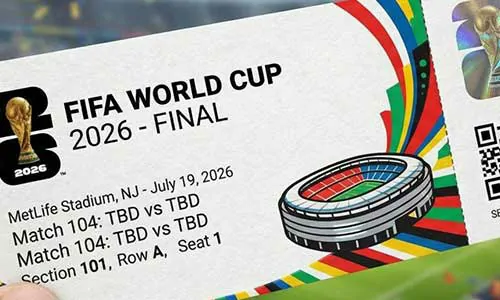
Welcome to the ultimate breakdown of the biggest soccer tournament in history. If you are looking to understand how the global game is transforming, you are in the right place. In this comprehensive guide, the FIFA World Cup 2026 Explained: Expansion Format and New Regulations will be analyzed in detail to clarify exactly how this monumental tournament operates. With more teams, more host cities, and updated rules, this historic event is reshaping the landscape of international football forever.
Whether you are a casual fan trying to follow your favorite country or a seasoned analyst studying tactical changes, staying ahead of these shifts is essential. Consequently, this article serves as your go-to resource for everything related to the expanded tournament structure, on-field guidelines, and regional logistics across North America.
Table of Contents
- 1. The Road to 48 Teams: Why the Expansion Happened
- 2. Group Stage Mechanics: 12 Groups of 4 Explained
- 3. The Brand New Knockout Stage: Entering the Round of 32
- 4. Old vs. New: Comparing Tournament Formats
- 5. Yellow Cards, Red Cards, and Disciplinary Regulations
- 6. Gameplay Adjustments: Cooling Breaks and No Group Stage Extra Time
- 7. Host Cities, Travel Logistics, and Regional Pods
- 8. The Broader Debate: Pros and Cons of the Expanded World Cup
- 9. Frequently Asked Questions (FAQ)
- 10. Conclusion and Final Thoughts
The Road to 48 Teams: Why the Expansion Happened
The decision to expand the tournament from 32 teams to 48 teams marks the most significant structural change since 1998. When assessing the FIFA World Cup 2026 Explained: Expansion Format and New Regulations, we must first look at the driving forces behind this historic shift. FIFA’s primary objective was to democratize the tournament, allowing underrepresented football federations from Africa, Asia, and North America a fairer opportunity to compete on the global stage.
Historically, smaller football nations found it incredibly difficult to qualify due to the highly competitive and limited slot allocations. By adding 16 more countries, FIFA has created a pathway for emerging football nations to experience the magic of the tournament. For instance, regions like Africa (CAF) and Asia (AFC) have seen their qualification quotas nearly double, which injects new energy and diversity into the competition.
Moreover, the commercial opportunities associated with a 48-team tournament are unmatched. With more games broadcasted globally, sponsorship revenues, ticket sales, and media rights have soared to record heights. Therefore, the FIFA World Cup 2026 Explained: Expansion Format and New Regulations is as much about economic globalization as it is about sporting inclusion.
Group Stage Mechanics: 12 Groups of 4 Explained
Initially, football’s governing body proposed a format of 16 groups consisting of three teams each. However, this proposal faced immense backlash from fans, coaches, and sports scientists alike. The primary concern was the risk of collusion—often referred to as the “Disgrace of Gijón” scenario—where two teams playing in the final group match could engineer a specific result to eliminate the third team. Consequently, FIFA wisely abandoned this idea in favor of a much more competitive alternative.
Group Stage Mechanics and FIFA World Cup 2026 Explained: Expansion Format and New Regulations
Under the finalized format, the 48 participating nations are divided into 12 groups of four teams each. Each country plays three group-stage matches against their group opponents. This preserves the traditional and highly dramatic four-team group dynamic, ensuring that final group-stage games are played simultaneously to maintain sporting integrity.
In addition to the group structure, the criteria for advancing to the next stage have evolved. To understand how teams survive this initial phase, let us look at the qualification breakdown:
- The top two teams from each of the 12 groups automatically qualify for the knockout rounds.
- To fill the remaining spots, the eight best third-placed teams across all 12 groups also advance.
- This results in exactly 32 teams moving forward, keeping the drama alive for almost every team until the final whistle of the group stage.
Because of this structure, third-placed teams can no longer afford to relax after a loss. Goal difference, goals scored, and even disciplinary records play an essential role in determining who advances. This makes every single goal incredibly valuable, preventing dead rubber matches and keeping fans glued to their screens.
The Brand New Knockout Stage: Entering the Round of 32
Once the dust settles on the group stage, the tournament transitions into an entirely new phase of competition. For the first time in history, the elimination bracket begins with a Round of 32 rather than the traditional Round of 16. This extra knockout round adds an extra layer of intensity and unpredictable drama to the bracket.
In past editions, a country needed to navigate seven matches to lift the coveted trophy. However, according to the FIFA World Cup 2026 Explained: Expansion Format and New Regulations, the eventual champions must now play a grueling total of eight matches to claim glory. This extra game tests the physical limits, squad depth, and tactical adaptability of the world’s elite teams.
Furthermore, the introduction of the Round of 32 means that traditional football powerhouses have a smaller margin for error. A single poor performance in the first knockout game can result in an immediate flight home, opening the door for underdog nations to secure historic upsets in one-off matches.
Old vs. New: Comparing Tournament Formats
To help you visualize these massive structural changes, we have compiled a direct comparison of the traditional 32-team format used in Qatar 2022 with the expanded 48-team framework implemented today.
| Feature | Qatar 2022 (Old Format) | North America 2026 (New Format) |
|---|---|---|
| Total Teams | 32 Teams | 48 Teams |
| Total Matches | 64 Matches | 104 Matches |
| Group Structure | 8 Groups of 4 | 12 Groups of 4 |
| Knockout Starting Round | Round of 16 | Round of 32 |
| Matches Played by Finalists | 7 Matches | 8 Matches |
| Tournament Duration | 29 Days | 39 Days |
As illustrated in the table, the jump from 64 to 104 total matches is astronomical. This expansion offers television networks, travel industries, and local host cities an unprecedented economic boost while offering fans more daily football action than ever before.
Yellow Cards, Red Cards, and Disciplinary Regulations
With an extra knockout round added to the bracket, player suspension risks naturally increase. If the traditional rules remained untouched, a significant percentage of key players would likely miss the semi-finals or the final due to minor, accumulated yellow cards. Recognizing this issue, FIFA introduced updated disciplinary policies to keep matches highly competitive.
New Regulatory Changes and FIFA World Cup 2026 Explained: Expansion Format and New Regulations
To balance discipline with the desire to field the strongest possible lineups, FIFA implemented a dual-reset amnesty policy for accumulated yellow cards. Under these new parameters, single yellow cards are completely cleared at two specific intervals during the tournament:
- First Reset: At the conclusion of the group stage, all single yellow cards are wiped clean. This ensures that players enter the Round of 32 with a fresh slate.
- Second Reset: Following the completion of the quarter-finals, all single yellow cards are cleared again. This guarantees that no player misses the prestigious final match merely because of an accumulated booking from earlier knockout rounds.
However, coaches and players must remain incredibly vigilant. If a player accumulates two yellow cards in separate games before a reset point, they will still serve an automatic one-match ban in the very next fixture. Furthermore, if a player receives a suspension-triggering caution during a quarter-final match, they must still sit out the semi-final, as the subsequent reset only clears pending single cautions, not active suspensions.
In addition to yellow card resets, a notable on-field regulation has been introduced regarding confrontations. Players who cover their mouths to disguise verbal abuse or comments directed at opponents or match officials are now subject to immediate yellow or red cards. This rule promotes transparency, on-pitch respect, and aids assistant referees and television cameras in identifying unsporting behavior.
Gameplay Adjustments: Cooling Breaks and No Group Stage Extra Time
The summer climate across North America presents unique physical challenges for athletes. With host stadiums spread across diverse environments—ranging from high altitudes in Mexico City to intense summer humidity in Miami and Houston—player safety is a paramount concern. Consequently, FIFA has formalized several on-field operational guidelines.
First, mandatory cooling breaks (or hydration breaks) are triggered when the wet-bulb globe temperature exceeds specific safety thresholds. These short, structured breaks allow players to rehydrate, re-evaluate tactics, and recover, thereby minimizing the risk of heat exhaustion.
On the other hand, group-stage match rules remain direct and simple. In the event of a tie at the end of the standard 90 minutes of regulation, the match ends in a draw. No extra time or penalty shootouts occur during the group phase, and both competing countries receive exactly one point in the standings. This avoids unnecessary physical exertion before the knockout rounds begin, protecting players from premature fatigue.
Host Cities, Travel Logistics, and Regional Pods
Co-hosted by Canada, Mexico, and the United States, this tournament spans three massive nations across multiple time zones. Coordinating the movement of 48 teams, coaching staffs, and millions of traveling fans is an unprecedented logistical challenge. To tackle this, the tournament organizers grouped the 16 host cities into three distinct regional divisions: West, Central, and East.
Regional Pods and FIFA World Cup 2026 Explained: Expansion Format and New Regulations
To reduce travel fatigue and minimize carbon emissions, teams play their group-stage matches within their assigned regional pod. This strategic planning ensures that players are not forced to endure cross-continental flights between consecutive games.
Let us look at how the host cities are organized geographically:
- West Region: Vancouver, Seattle, San Francisco, Los Angeles, and Guadalajara.
- Central Region: Kansas City, Dallas, Houston, Atlanta, Monterrey, and Mexico City.
- East Region: Toronto, Boston, Philadelphia, Miami, and New York/New Jersey.
By keeping teams situated within these geographical zones during the initial group phase, organizers hope to maintain peak athletic performance and ensure a highly competitive environment. However, as the tournament progresses deep into the knockout brackets, travel demands naturally increase, making squad depth and recovery protocols a defining factor for success.
The Broader Debate: Pros and Cons of the Expanded World Cup
As with any major change in global sports, the 48-team expansion has sparked intense debate among fans, pundits, and former players. Understanding these opposing perspectives offers a well-rounded look at the modern tournament format.
The Advantages of Expansion
Proponents highlight that expanding the participant pool brings a wealth of positive changes. Firstly, it provides smaller footballing nations with a rare platform to compete against elite teams, fostering global football development. Countries that have never qualified before can now inspire the next generation of local talent. Secondly, more matches mean increased global fan engagement, higher tourism revenues for host cities, and a spectacular celebration of multiculturalism.
The Disadvantages of Expansion
Conversely, critics raise several valid concerns regarding the new format. A major talking point is the potential dilution of quality, especially during the early group matches. Opponents argue that lopsided games between world giants and lower-ranked teams could diminish the prestige of the tournament. Additionally, the expanded schedule adds a minimum of one extra match for the finalists, worsening player fatigue at the end of a long club season.
Ultimately, only the on-field action will determine whether this grand scale experiment is hailed as an overwhelming success or a cautionary tale for international sports administration.
Frequently Asked Questions: FIFA World Cup 2026 Explained: Expansion Format and New Regulations
Q1: How many teams are participating in the 2026 World Cup?
A total of 48 teams are participating, which is an increase of 16 teams from the previous 32-team format used in Qatar 2022.
Q2: How does the new group stage format work?
The 48 teams are divided into 12 groups of four. The top two teams from each group, along with the eight best third-placed teams overall, advance to the Round of 32.
Q3: How are yellow cards managed with the new rules?
Single yellow cards are cleared twice during the tournament: once after the group stage and once after the quarter-finals. This prevents accumulated yellow cards from causing a player to miss the semi-final or final matches.
Q4: Is there extra time in the group stage matches?
No, there is no extra time or penalty shootout in the group stages. If a match is tied after 90 minutes of regulation, it ends as a draw, and both teams receive one point.
Q5: What is the new red card rule regarding confrontations?
Players who cover their mouths to hide what they are saying during an on-field confrontation with opponents or referees can now be shown a card and potentially sent off.
Q6: How many matches does a team need to play to win the tournament?
The two finalists must play a total of eight matches (three group games and five knockout games), which is one more than the seven matches required in previous tournaments.
Conclusion and Final Thoughts
The FIFA World Cup 2026 Explained: Expansion Format and New Regulations details a thrilling new era for international soccer. By embracing a 48-team roster, introducing the highly anticipated Round of 32, and revising critical disciplinary guidelines, FIFA has set the stage for an unforgettable summer of football. While challenges regarding player fatigue and travel logistics remain, the opportunity to see more nations compete on the grandest stage is a major step forward for the global game.
For official live updates, ticket information, and detailed group standings, you can visit the Official FIFA Website. For comprehensive post-match analysis, expert referee opinions, and real-time news, check out the tournament guides on Fox Sports.
What are your thoughts on this new expanded format? Do you think the inclusion of 48 teams will make the matches more exciting, or will it dilute the overall competition? Let us know your predictions and join the conversation in the comments section below!