FIFA World Cup 2026 Stadium Guide: Locations, Capacities and Key Facts
The global sports landscape is experiencing a massive shift as the beautiful game reaches unprecedented heights. The tournament represents a historic milestone, bringing together 48 nations across three host countries: Canada, Mexico, and the United States. Navigating this tournament requires meticulous preparation. Therefore, we present the ultimate FIFA World Cup 2026 Stadium Guide: Locations, Capacities and Key Facts to serve as your definitive resource for planning, exploring, and understanding these world-class football venues.
Table of Contents
- Overview of the Historic 2026 Tournament
- United States Venues: Icons of Innovation
- Mexico Venues: Rich History and Passion
- Canada Venues: Northern Frontiers
- Complete Stadium Capacity & Location Comparison
- Why You Need a FIFA World Cup 2026 Stadium Guide: Locations, Capacities and Key Facts
- How We Built This FIFA World Cup 2026 Stadium Guide: Locations, Capacities and Key Facts
- Essential Fan Travel & Logistics Tips
- Frequently Asked Questions (FAQ)
- Final Takeaways on the FIFA World Cup 2026 Stadium Guide: Locations, Capacities and Key Facts
Overview of the Historic 2026 Tournament
The 2026 FIFA World Cup is breaking records before a single ball is even kicked. For the first time, 48 teams will participate in the tournament, representing a significant expansion from the previous 32-team format. Consequently, the schedule features a total of 104 matches, creating a monumental demand for elite infrastructure across North America.
Hosting duties are split between 16 carefully selected cities, with 11 located in the United States, three in Mexico, and two in Canada. These venues must accommodate vast crowds while complying with FIFA’s stringent modern standards. Furthermore, each host city offers unique geographical, cultural, and climate profiles that teams and spectators must navigate.
Whether you are planning to attend the tournament in person or following along from home, understanding the logistics of these arenas is essential. In the following sections, we break down each region to provide a detailed view of the match environments.
United States Venues: Icons of Innovation
The United States boasts some of the most technologically advanced and expensive sports arenas on the planet. Out of the 16 host cities, 11 are located in the US, with many boasting capacities that exceed 65,000 spectators. Let us explore these incredible structures in detail.
New York New Jersey Stadium (MetLife Stadium)
Located in East Rutherford, New Jersey, just a short distance from the heart of New York City, this open-air venue is one of the premier sporting facilities in North America. Consequently, it has been chosen to host the prestigious World Cup Final on July 19, 2026.
The stadium possesses an official tournament capacity of approximately 80,663. Moreover, it is highly accessible via public transportation, although fans are advised to plan their commutes carefully. It regularly serves as home to the NFL’s Giants and Jets.
Dallas Stadium (AT&T Stadium)
Situated in Arlington, Texas, this spectacular dome structure is famous for its retractable roof and massive center-hung video board. Because of its massive scale, it can comfortably accommodate over 70,649 fans, with options to expand even further for standing crowds.
Additionally, Dallas Stadium will host multiple knockout-stage matches. The venue’s climate-controlled environment ensures optimal playing and viewing conditions, shielding spectators from the intense summer heat of Texas.
Atlanta Stadium (Mercedes-Benz Stadium)
Atlanta’s signature stadium is recognized worldwide for its unique pinwheel-style retractable roof and circular “halo” video board. It has an official tournament capacity of 68,239, making it a key venue for high-stakes matches.
Furthermore, the venue is a pioneer in sustainable sports architecture, achieving a LEED Platinum certification. In addition, its location near downtown Atlanta ensures that fans can easily access restaurants, hotels, and transit lines.
Los Angeles Stadium (SoFi Stadium)
This state-of-the-art facility in Inglewood, California, is the most expensive stadium ever constructed. Its indoor-outdoor canopy design and double-sided Samsung Infinity Screen offer spectators an immersive visual experience.
The stadium features a capacity of 70,492 for the tournament. Although the venue is located near Los Angeles International Airport, visitors should prepare for typical southern California traffic when traveling on match days.
Philadelphia Stadium (Lincoln Financial Field)
Philadelphia’s primary stadium is beloved for its energetic crowd atmosphere and commitment to green energy. Featuring solar panels and wind turbines, the venue generates a significant portion of its own power.
With a tournament capacity of 68,324, it offers exceptional, unobstructed sightlines from every corner. Consequently, it is expected to deliver highly intimate matchday experiences for fans traveling from across the globe.
Boston Stadium (Gillette Stadium)
Located in Foxborough, Massachusetts, this historic venue sits approximately 30 miles south of downtown Boston. The stadium features a newly renovated lighthouse monument and a massive outdoor plaza for fan activities.
The official capacity for World Cup matches is listed at 64,146. Because of its suburban location, driving or taking dedicated commuter trains from Boston or Providence are the most common transport options.
Houston Stadium (NRG Stadium)
Houston Stadium was the first NFL venue to feature a retractable roof, making it a highly versatile location. Its capacity of 68,777 guarantees a lively atmosphere for every game it hosts.
Moreover, the stadium has extensive experience hosting major international soccer tournaments, including the Copa America. Consequently, the local staff is highly prepared to handle massive crowds and demanding media operations.
Kansas City Stadium (Arrowhead Stadium)
Renowned globally as one of the loudest outdoor venues in professional sports, this historic stadium in Missouri brings immense energy to the tournament. It features an official capacity of 69,045.
In addition to its unmatched acoustic atmosphere, Kansas City is famous for its rich culinary culture and legendary pre-game tailgating. Spectators visiting this venue are guaranteed an authentic, passionate American sports experience.
Miami Stadium (Hard Rock Stadium)
Located in Miami Gardens, Florida, this facility is a hub for international sports, having recently hosted the 2024 Copa America Final. A massive open-air canopy covers nearly 90% of the seating bowl, protecting fans from both rain and sun.
Its tournament capacity stands at 64,478. Given the city’s diverse population, Miami Stadium is expected to showcase some of the most vibrant and culturally expressive fan support during the entire tournament.
San Francisco Bay Area Stadium (Levi’s Stadium)
Situated in Santa Clara, California, this eco-friendly venue is located in the heart of Silicon Valley. It boasts advanced technological infrastructure, including high-speed Wi-Fi and seamless mobile ordering systems.
The stadium’s capacity is 68,827. Because the venue is located south of San Francisco, spectators can utilize light rail networks or local train systems to commute directly to the stadium gates.
Seattle Stadium (Lumen Field)
Known for its unique architectural design that captures and amplifies crowd noise, this Pacific Northwest venue is a fortress for soccer. It offers an official capacity of 66,925 for the group and knockout stages.
Furthermore, Seattle Stadium is located directly next to the city’s bustling downtown core. Consequently, fans can walk from major hotels and restaurants directly to the matches, enjoying beautiful views of Puget Sound along the way.
Mexico Venues: Rich History and Passion
Mexico brings a legendary footballing heritage to the 2026 tournament. It is the first country to host matches in three separate World Cups, having previously welcomed the world in 1970 and 1986. The three Mexican host stadiums combine deep history with modern comfort.
Mexico City Stadium (Estadio Azteca)
Estadio Azteca is a holy site in world football, having witnessed iconic moments from legends like Pelé and Diego Maradona. For the 2026 tournament, it will make history once again by hosting the opening match on June 11, 2026.
The historic stadium has a configured capacity of 80,824. Located at an altitude of over 2,240 meters above sea level, it presents a unique atmospheric challenge for visiting players, while offering spectators an incredibly passionate environment.
Guadalajara Stadium (Estadio Akron)
Located in Zapopan, Guadalajara, this highly modern arena features a striking design resembling a grassy volcano with a floating cloud-like roof. It is the home stadium of the popular club Chivas.
With a tournament capacity of 45,664, it provides an intimate setting with excellent sightlines. Furthermore, Guadalajara’s rich cultural traditions make it a favorite destination for international travelers seeking authentic Mexican hospitality.
Monterrey Stadium (Estadio BBVA)
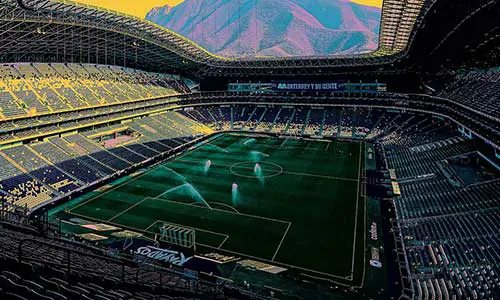
Commonly referred to as “El Gigante de Acero” (The Steel Giant), this stunning venue is located in Guadalupe, Monterrey. It is widely considered one of the most picturesque stadiums in the world due to the dramatic backdrop of the Cerro de la Silla mountain.
The stadium boasts a tournament capacity of 51,243. Its ultra-modern architecture and excellent facilities ensure that spectators can enjoy high-level football in premium comfort.
Canada Venues: Northern Frontiers
Canada is hosting the men’s tournament for the first time in its history. The nation has selected two vibrant cities, one on the Pacific coast and one in its financial heartland, both of which have underwent preparations to welcome international crowds.
Vancouver Stadium (BC Place)
BC Place is located on the edge of False Creek in downtown Vancouver. It features a sophisticated cable-supported retractable roof and a massive central video screen, making it a highly adaptable all-weather venue.
The stadium has an official tournament capacity of 52,497. Because it is located directly in the downtown core, fans can easily access the venue on foot or via the city’s efficient SkyTrain transit network.
Toronto Stadium (BMO Field)
Situated at Exhibition Place near the shores of Lake Ontario, this stadium is the home of Toronto FC. To meet FIFA’s capacity requirements, the stadium underwent temporary seating expansions to reach a capacity of 43,036.
Consequently, Toronto Stadium offers the most intimate match atmosphere of the entire tournament. Its proximity to downtown Toronto makes it incredibly convenient for fans utilizing commuter rail and streetcars.
Complete Stadium Capacity & Location Comparison
To help you quickly compare the various structures hosting matches in 2026, we have compiled a comprehensive reference table. Consequently, this allows you to see the distribution of capacities and locations across all three host nations.
| Host City | Original Stadium Name | Official FIFA Tournament Name | Capacity | Country |
|---|---|---|---|---|
| New York/New Jersey | MetLife Stadium | New York New Jersey Stadium | 80,663 | United States |
| Dallas | AT&T Stadium | Dallas Stadium | 70,649 | United States |
| Los Angeles | SoFi Stadium | Los Angeles Stadium | 70,492 | United States |
| Kansas City | Arrowhead Stadium | Kansas City Stadium | 69,045 | United States |
| San Francisco | Levi’s Stadium | San Francisco Bay Area Stadium | 68,827 | United States |
| Houston | NRG Stadium | Houston Stadium | 68,777 | United States |
| Philadelphia | Lincoln Financial Field | Philadelphia Stadium | 68,324 | United States |
| Atlanta | Mercedes-Benz Stadium | Atlanta Stadium | 68,239 | United States |
| Seattle | Lumen Field | Seattle Stadium | 66,925 | United States |
| Miami | Hard Rock Stadium | Miami Stadium | 64,478 | United States |
| Boston | Gillette Stadium | Boston Stadium | 64,146 | United States |
| Mexico City | Estadio Azteca | Mexico City Stadium | 80,824 | Mexico |
| Monterrey | Estadio BBVA | Monterrey Stadium | 51,243 | Mexico |
| Guadalajara | Estadio Akron | Guadalajara Stadium | 45,664 | Mexico |
| Vancouver | BC Place | Vancouver Stadium | 52,497 | Canada |
| Toronto | BMO Field | Toronto Stadium | 43,036 | Canada |
Why You Need a FIFA World Cup 2026 Stadium Guide: Locations, Capacities and Key Facts
Navigating an event of this magnitude requires a highly organized approach. Because of the vast distances separating host cities like Vancouver and Mexico City, relying on outdated or fragmented travel information can lead to severe logistical problems. Therefore, utilizing a comprehensive FIFA World Cup 2026 Stadium Guide: Locations, Capacities and Key Facts is crucial for ensuring a seamless journey.
Furthermore, each host stadium has specific security protocols, transit systems, and bag policies. For instance, some stadiums rely entirely on light rail networks, while others are heavily suburban and require shuttle services. Understanding these logistical nuances before arriving at the venue will save you valuable time and stress.
Additionally, knowing the climate conditions of each host city is critical. While some venues feature retractable roofs with advanced air conditioning, others are open-air environments subject to intense summer heat or sudden rainfall. By reviewing our detailed breakdown, you can dress appropriately and prepare for the environment of your designated matches.
How We Built This FIFA World Cup 2026 Stadium Guide: Locations, Capacities and Key Facts
To ensure that this reference material meets the highest standards of accuracy, we systematically synthesized official tournament disclosures, stadium logistics plans, and verified geographical data. Consequently, this FIFA World Cup 2026 Stadium Guide: Locations, Capacities and Key Facts is designed to address the exact questions and needs of traveling football enthusiasts.
Moreover, we analyzed historical match data and local infrastructure projects completed in preparation for the tournament. From transit upgrades in Toronto to stadium expansions in Southern California, we tracked how these spaces have evolved to handle international crowds. This meticulous approach guarantees that you are receiving up-to-date, highly reliable insights.
In addition, we factored in the official name changes mandated by FIFA’s sponsorship policies. Because of commercial restrictions, many iconic NFL and MLS stadiums use descriptive geographic names during the tournament. Our guide ensures you do not get confused by these structural name changes when booking your travel and ticketing packages.
Essential Fan Travel & Logistics Tips
Traveling across North America during the tournament presents unique challenges due to the scale of the continent. Unlike previous tournaments where host cities were closely clustered, the 2026 edition spans thousands of miles across multiple time zones. Therefore, proper travel planning is the key to an enjoyable experience.
- Book Cross-Border Transit Early: Moving between the United States, Mexico, and Canada requires passing through international border customs. Ensure your passports and relevant visas are secured months in advance.
- Leverage Public Transportation: Many urban stadiums, such as Vancouver Stadium and Seattle Stadium, feature direct links to local light rail networks. Utilizing public transit is usually faster and more affordable than rideshare apps on match days.
- Prepare for Diverse Climates: The altitude of Mexico City requires physical acclimation, while the summer humidity of Miami demands proper hydration. Check the local weather forecasts for each city on your itinerary.
- Understand Bag Policies: Most host venues enforce strict clear-bag policies. Review the official guidelines on the official FIFA website to avoid having your personal items confiscated at the security gates.
Frequently Asked Questions (FAQ)
Q1: Which stadium is hosting the FIFA World Cup 2026 Final?
A1: The final match will be hosted at the New York New Jersey Stadium (MetLife Stadium) in East Rutherford, New Jersey, on July 19, 2026. The stadium has an official tournament capacity of approximately 80,663 spectators.
Q2: Why do some stadiums have different names during the tournament?
A2: Due to strict FIFA regulations regarding commercial sponsorships, stadiums cannot bear corporate-sponsored names during the tournament. Consequently, venues like Gillette Stadium and SoFi Stadium are referred to as Boston Stadium and Los Angeles Stadium, respectively.
Q3: Which is the smallest stadium hosting matches in 2026?
A3: Toronto Stadium (BMO Field) in Canada is the smallest venue, with a configured tournament capacity of approximately 43,036 spectators after receiving temporary seating expansions.
Q4: How many total host cities and stadiums are participating?
A4: There are 16 host cities in total across three nations. The United States features 11 host venues, Mexico has three, and Canada has two.
Q5: Where can I access official maps and travel schedules?
A5: You can access the most accurate matchday schedules, accessibility information, and detailed maps on the official FIFA website and follow news updates on Al Jazeera.
Q6: Which stadium sits at the highest altitude?
A6: Mexico City Stadium (Estadio Azteca) is the highest venue in the tournament, situated at over 2,240 meters (approx. 7,350 feet) above sea level, which presents unique fitness challenges for players.
Final Takeaways on the FIFA World Cup 2026 Stadium Guide: Locations, Capacities and Key Facts
The 2026 tournament is shaping up to be a historic celebration of football. Spanning three massive countries, 16 distinct cities, and several time zones, the sheer scale of the event requires fans to be highly organized. By utilizing our detailed FIFA World Cup 2026 Stadium Guide: Locations, Capacities and Key Facts, you are now equipped with the core knowledge needed to plan your journeys and appreciate the magnificent structures hosting these games.
From the historic and high-altitude grounds of Estadio Azteca in Mexico City to the cutting-edge luxury of SoFi Stadium in Los Angeles, each arena offers a unique window into the regional culture of North American sports. Therefore, whether you are attending a single group stage match or following your team all the way to the final in East Rutherford, these venues will provide an unforgettable backdrop.
As the tournament progresses, we encourage you to stay updated with official schedules, traffic reports, and weather warnings. Share this guide with fellow football supporters to help them coordinate their journeys successfully!