FIFA World Cup 2026 Ticket Lottery Explained: How the Draw System Works
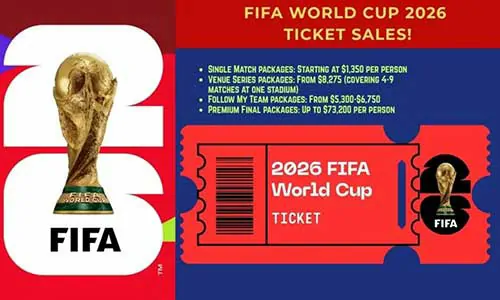
Securing a seat at the world’s biggest sporting event requires understanding a complex ticketing process. In this comprehensive guide, we have the complete FIFA World Cup 2026 Ticket Lottery Explained: How the Draw System Works so that you can navigate the rules with absolute clarity. Whether you are aiming to watch your favorite team live or simply want to experience the unmatched energy of the tournament, this breakdown is designed to help you plan your journey effectively.
As the tournament expands to a historic 48-team format across three host nations—Canada, Mexico, and the United States—demand for tickets has reached unprecedented heights. To ensure a fair allocation process, FIFA utilizes an advanced randomized draw system. This system is designed to give every applicant an equal opportunity, regardless of when they submit their application during the open window.
Table of Contents
- 1. FIFA World Cup 2026 Ticket Lottery Explained: How the Draw System Works – The Fundamentals
- 2. Step-by-Step Breakdown: FIFA World Cup 2026 Ticket Lottery Explained: How the Draw System Works
- 3. Why FIFA Uses This Model: FIFA World Cup 2026 Ticket Lottery Explained: How the Draw System Works
- 4. Understanding Ticket Categories and Price Tiers
- 5. Host Country Exclusivity and Special Access
- 6. Current Status of Tickets: Last-Minute Sales and Resale Platform
- 7. Frequently Asked Questions (FAQ)
FIFA World Cup 2026 Ticket Lottery Explained: How the Draw System Works – The Fundamentals
To begin with, we must recognize that the primary ticketing phases for the tournament rely on a Random Selection Draw. This means that tickets are not sold on a first-come, first-served basis during these initial windows. Consequently, submitting your application on the first minute of the first day gives you the exact same chance of success as someone applying in the final hour before the window closes.
During the major sales phases, fans enter a dedicated portal to submit their ticket applications. You must register a personal FIFA account and choose the specific matches, ticket categories, and quantity you wish to purchase. Only one application per household is allowed to maintain fairness and prevent artificial inflation of demand.
Furthermore, this system handles millions of requests simultaneously. By compiling all applications into a massive secure database, FIFA’s proprietary algorithm processes the randomized selection once the application window officially shuts. This ensures that the global community has equal access, minimizing the technical strain on the servers and preventing website crashes on launch day.
Step-by-Step Breakdown: FIFA World Cup 2026 Ticket Lottery Explained: How the Draw System Works
Understanding the precise mechanics of the lottery can help you optimize your choices. The process is broken down into structured stages, starting from your registration to the final automated payment. Here is exactly how the draw operates:
- Account Registration & Verification: First, applicants must register a verified FIFA ID on the Official FIFA Ticketing Portal. You must provide accurate personal details, including your nationality, address, and passport or national ID number.
- Submitting the Ticket Request: Next, you enter the ticket selection screen. Here, you choose the matches you wish to attend. You can select tickets based on specific match numbers, host cities, or team paths once the qualification and group draws are set.
- Choosing Categories and Quantities: For each match, you select a ticket category (ranging from Category 1 to Category 4, plus accessibility options). You must also specify how many tickets you need, usually capped at a maximum of six tickets per match to prevent bulk buying.
- Providing Payment Authorization: Crucially, you must input your payment card details at the time of your application. While no funds are charged or held initially, this step is mandatory. It acts as a security measure to verify that the applicant is a legitimate buyer.
- The Automated Random Selection: After the closing date, the application window is sealed. The computerized selection draw begins. The algorithm matches the total available inventory for each category of every stadium against the pool of applicants.
- Draw Notification & Automated Charging: Finally, applicants receive an email notification detailing whether they were successful, partially successful, or unsuccessful. If successful, the payment card provided is automatically charged for the allocated tickets. There is no option to opt out or change your mind after being selected.
Consequently, it is highly recommended to only apply for matches you genuinely intend to watch and can afford. Because the payment process is fully automated, any failure in your card transaction—such as insufficient funds or bank fraud blocks—will lead to the immediate cancellation of your entire allocated ticket package.
Why FIFA Uses This Model: FIFA World Cup 2026 Ticket Lottery Explained: How the Draw System Works
Many fans often wonder why a simple checkout store is not used for such events. However, when we analyze the numbers, the necessity of the lottery becomes clear. With an estimated global audience in the billions, demand for the 104 matches of the expanded 2026 tournament far exceeds the capacity of even the largest stadiums.
By implementing a randomized draw, FIFA achieves several critical goals simultaneously. First and foremost, it levels the playing field for fans across different time zones. Without a lottery, fans living in regions where the ticket window opens in the middle of the night would face a severe disadvantage compared to those in more convenient time zones.
In addition, the draw system acts as a major defense mechanism against automated buying bots and professional scalpers. Since speed is not a factor in securing tickets, scalper bots cannot utilize their rapid script execution advantages to sweep up available seats. This allows genuine supporters to access face-value pricing instead of being forced into the highly inflated secondary market.
Understanding Ticket Categories and Price Tiers
When preparing your application, choosing the right category is essential. FIFA categorizes seats based on their location within the stadium, which directly affects both the price and your relative chances of winning the lottery. Generally, lower-priced categories attract much higher volumes of applications, lowering your overall probability of selection in those specific tiers.
Specifically, Category 1 represents the prime viewing locations, usually along the main sidelines of the stadiums. Category 2 and Category 3 offer corner and behind-the-goal seating at moderate prices. Category 4 is the most affordable tier, but it is traditionally reserved exclusively for residents of the host nations—Canada, Mexico, and the United States.
The table below provides a general overview of the ticket category structure used during the major ticket lottery draws:
| Ticket Category | Stadium Location | Price Range Expectation | Target Audience |
|---|---|---|---|
| Category 1 | Prime sideline areas, lower and middle tiers | Highest Price Tier | International & Premium Fans |
| Category 2 | Corner sections, upper sidelines | Mid-to-High Tier | All Fans |
| Category 3 | Behind the goals, upper corners | Moderate Tier | All Fans |
| Category 4 | Upper deck behind the goals | Most Affordable | Host Country Residents Only |
| Accessibility | Dedicated wheelchair & easy-access spaces | Equivalent to Category 4 | Fans with Disabilities |
Therefore, if you want to increase your overall chances of winning, applying for a mix of categories across different matches can be an effective strategy. For highly anticipated matches, such as the opening games or the knockout rounds, applying for Category 1 or Category 2 might yield a slightly better success rate simply because the demand-to-supply ratio is less extreme than in the cheaper categories.
Host Country Exclusivity and Special Access
In accordance with FIFA’s long-standing tradition of supporting the local communities hosting the tournament, a specific allocation of tickets is set aside for residents of the host countries. For the 2026 edition, this includes verified residents of Canada, Mexico, and the United States.
This localized exclusivity primarily applies to Category 4 tickets, which are priced substantially lower than other tiers to ensure local communities can afford to attend matches. To qualify for this special category, applicants must provide a valid physical address within one of the host nations, and their payment method must be issued by a local financial institution.
Consequently, FIFA performs rigorous cross-checks on addresses and payment card details. If any discrepancy is found—such as an applicant claiming US residency while using an international card from another continent—the application is immediately flagged and discarded. This ensures that the benefits designed for local fans are protected from abuse.
Current Status of Tickets: Last-Minute Sales and Resale Platform
As the tournament progresses, the major lottery phases have officially concluded. If you missed out on the previous draws, do not lose hope. FIFA has transitioned into the subsequent stages of the ticketing lifecycle, which are designed to allocate any remaining inventory and facilitate secure ticket exchanges among fans.
Currently, the Last-Minute Sales Phase is live. In contrast to the lottery, this phase operates on a strict first-come, first-served basis. Tickets in this window are sold in real-time, meaning you can view immediate seat availability, select your preferred location on a stadium map, and complete your purchase with instant confirmation.
Additionally, the Official FIFA Resale Marketplace is open. This platform serves as the only authorized channel for fans to buy and sell verified tickets at regulated face-value prices. To learn more about match schedules, host cities, and specific stadium details, you can visit the Official FIFA Tournament Page to stay fully informed.
Purchasing tickets from unofficial secondary marketplaces carries significant risks. FIFA utilizes highly secured, digital-only tickets delivered exclusively via the official mobile ticketing app. Because of these strict digital distribution rules, tickets bought through unauthorized third-party platforms may be invalidated, and buyers risk being denied entry at the stadium gates.
Frequently Asked Questions (FAQ)
Is there any advantage to submitting my ticket application early in the draw?
No, there is absolutely no advantage to applying early. All applications submitted during the open window of the Random Selection Draw are pooled together and processed simultaneously. Whether you submit your request on the first day or the last day, your probability of winning remains exactly the same.
Can I cancel or change my tickets after winning the lottery?
Unfortunately, no. When you submit your application, you must provide your payment details and authorize FIFA to automatically charge your card if you are successful. If you win all or some of your requested tickets, the transaction is completed immediately, and tickets cannot be refunded, exchanged, or cancelled.
What happens if my payment card is declined after the draw?
If your payment card is declined for any reason—such as insufficient funds, an expired card, or a security block from your bank—your entire application is instantly cancelled. FIFA does not provide a grace period or a second payment attempt, so it is vital to notify your bank beforehand and ensure your card has adequate funds.
Can I apply for multiple matches playing on the same day?
No, the ticketing system prevents you from applying for matches that take place on the same day if the travel times between host cities make attendance physically impossible. The platform is designed to block overlapping schedule requests to ensure that tickets are not wasted on empty seats.
How do I receive my tickets if my application is successful?
All tickets for the tournament are fully digital. They are delivered exclusively through the official FIFA mobile ticketing app as the tournament dates approach. You will need a compatible smartphone to access, transfer, and scan your tickets at the stadium security checkpoints.
What is the official way to resell tickets I can no longer use?
If you have purchased tickets but can no longer attend, you must use the Official FIFA Resale Marketplace. This platform allows you to list your tickets for other fans to buy safely at face value. Reselling tickets through unauthorized websites or social media is strictly prohibited and can result in ticket cancellation.
Conclusion
In summary, the FIFA ticketing framework is designed to manage overwhelming global demand fairly and transparently. By utilizing a randomized computer draw, the system guarantees equal opportunity for every fan around the globe, while protecting the ecosystem from predatory scalpers and technical errors.
Now that you understand how the system works, the best step is to stay prepared for active windows and look out for official platform updates. Make sure your account details are fully up-to-date, verify your payment options, and keep an eye on the official channels. Register your interest on the official FIFA platform today and make sure you do not miss your chance to witness football history live!